
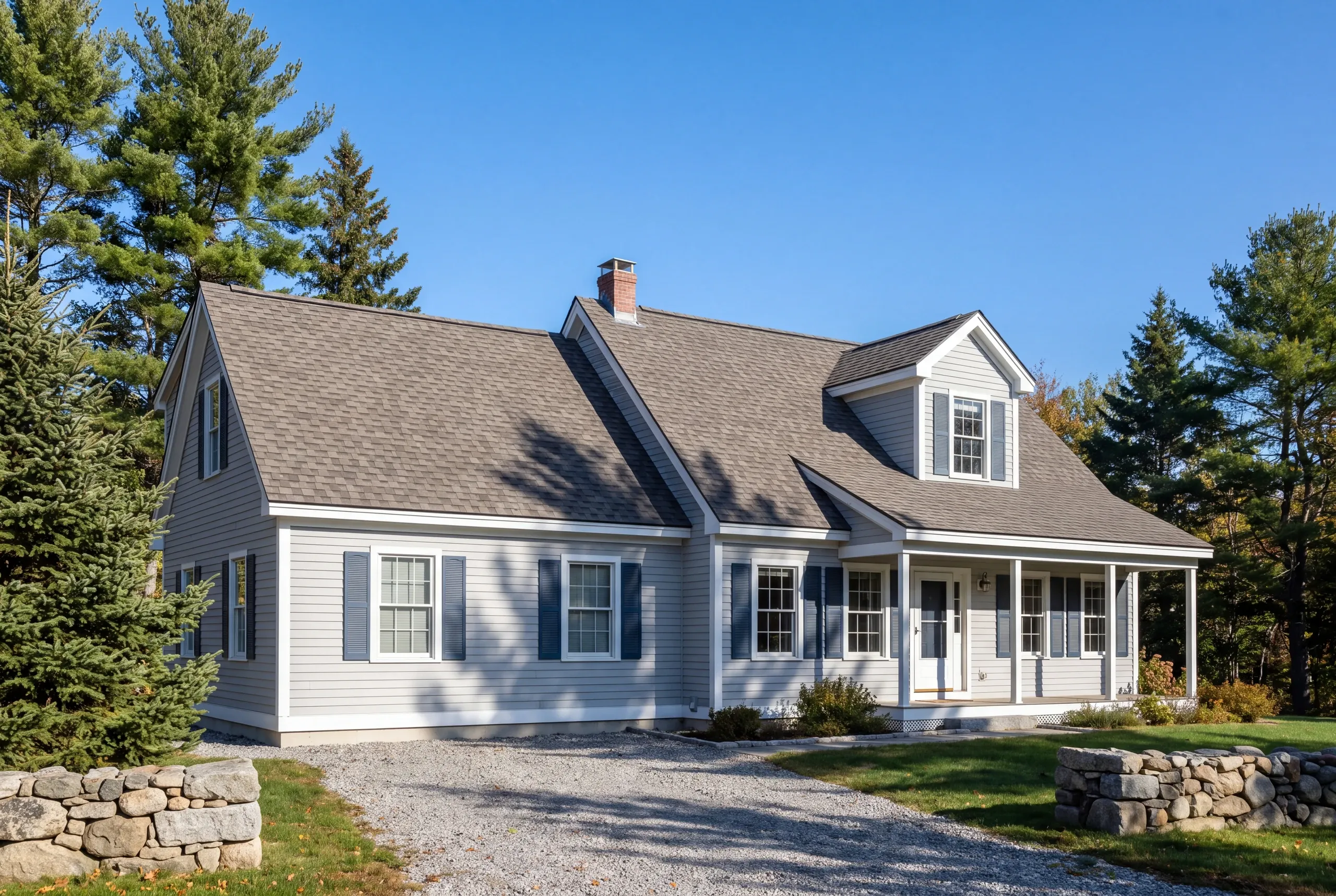
Quality Roofing Contractors | Kenneth Cox Construction
Kenneth Cox Construction has been a roofing contractor in MidCoast Maine since 1988, and roofs here fail at the details rather than in the middle of a slope.
- 38 years in business, since 1988
- Over 250 projects completed
- Affordable work, two-year written warranty
Roofs in MidCoast Maine almost never fail in the middle of a slope. They fail at the chimney, the valleys, the eaves and the ridge, so that is where the work has to be careful. Ken details those transitions himself on every roof we install.
We strip the old shingles off instead of laying new ones over top. On older houses around here the deck is often plank boards, and a slow chimney leak can leave sections that will not hold a nail. Once it is bare, ice and water membrane goes down at the eaves and valleys where this climate demands it.
Kenneth Cox Construction has been putting roofs on houses across MidCoast and Central Maine since 1988: coastal wind that lifts edges, inland snow that sits for weeks. Our written two-year workmanship warranty sits alongside whatever the shingle manufacturer covers.
Why do homeowners choose us for roofing?
Homeowners choose us for roofing because we have roofed across MidCoast and Central Maine since 1988, on the coast where wind lifts edges and inland where snow sits for months. Kenneth Cox Construction has been roofing across MidCoast and Central Maine since 1988, on the coast where wind lifts edges and inland where snow sits for weeks.
The company is BBB accredited, and our written two-year workmanship warranty sits alongside the manufacturer coverage on the shingles.
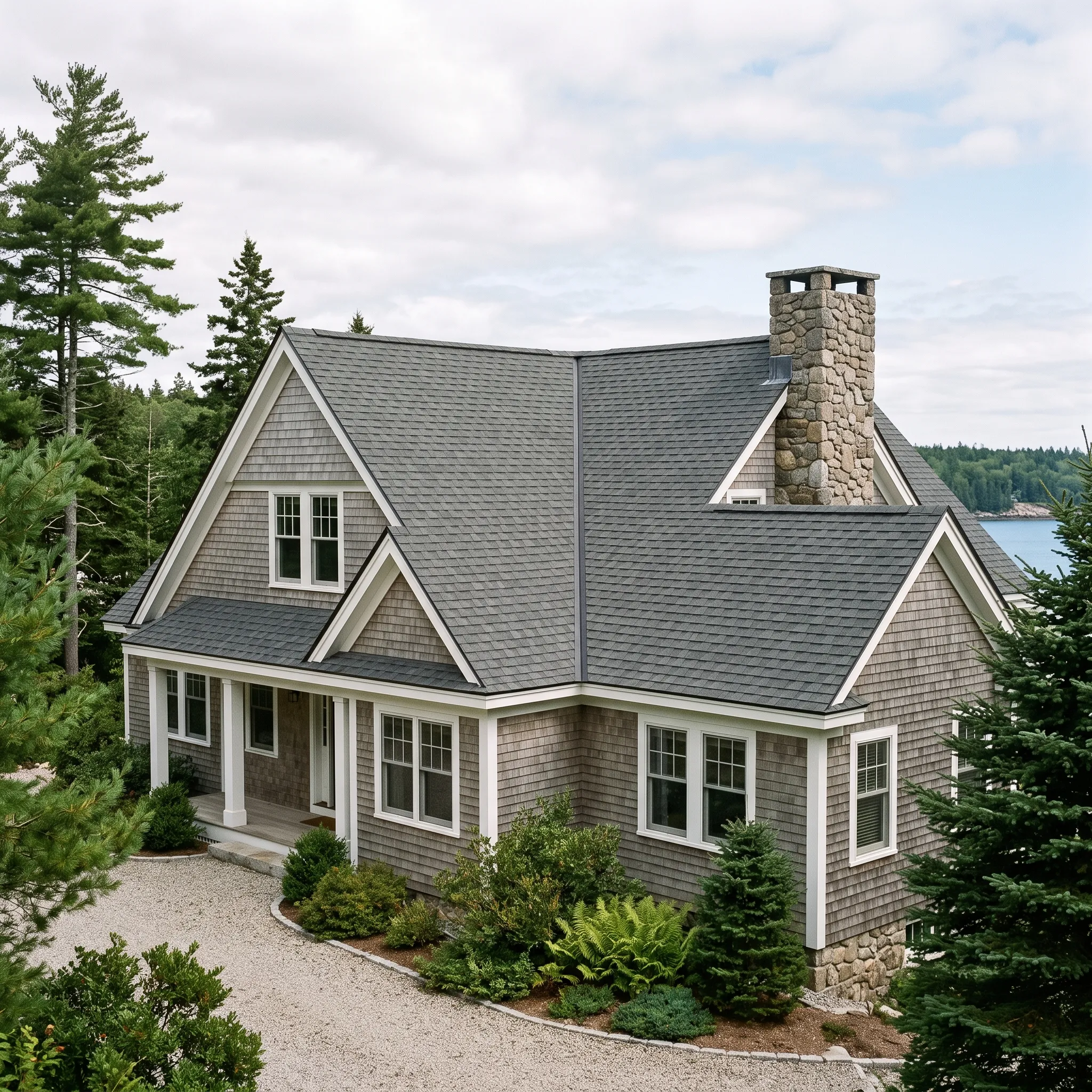
How much does a new roof cost in MidCoast Maine?
A new roof in MidCoast Maine costs what the pitch, the height and the layers coming off decide.
Every figure here is an average across many roofs rather than a number we can hold before seeing yours. Pitch, height, how many layers come off and what the deck looks like underneath all move it.
We do not publish a generic dollar table because no verified Maine market bands are available for this service. A number without the measured roof area, pitch, access, existing layers, and material system would look useful while hiding the variables that decide the quote.
An asphalt quote should identify tear-off, disposal, membrane, flashing, ventilation, and the chosen shingle. A metal quote should also identify panel type, concealed or exposed fastening, trim fabrication, and any snow retention.
Comparing totals without comparing those scopes produces a false bargain.
Deck repair is the line nobody can quote honestly from the ground. On older houses around here the deck is often plank board, and a chimney that has leaked slowly for years leaves sections that will not hold a nail.
We carry an allowance for that rather than guessing at it. You see what we find before any of it gets replaced.
Which other services do we offer in MidCoast Maine?
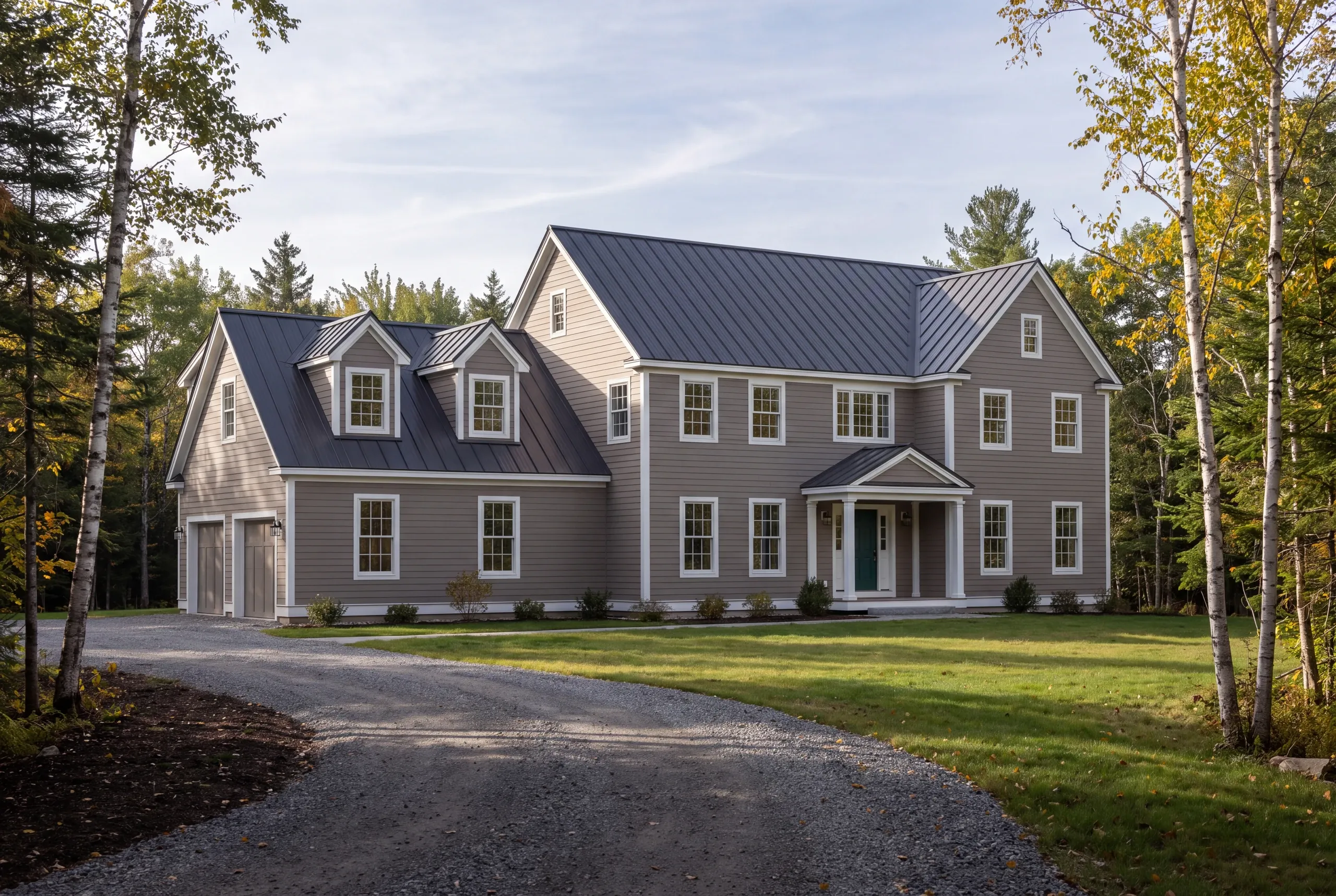
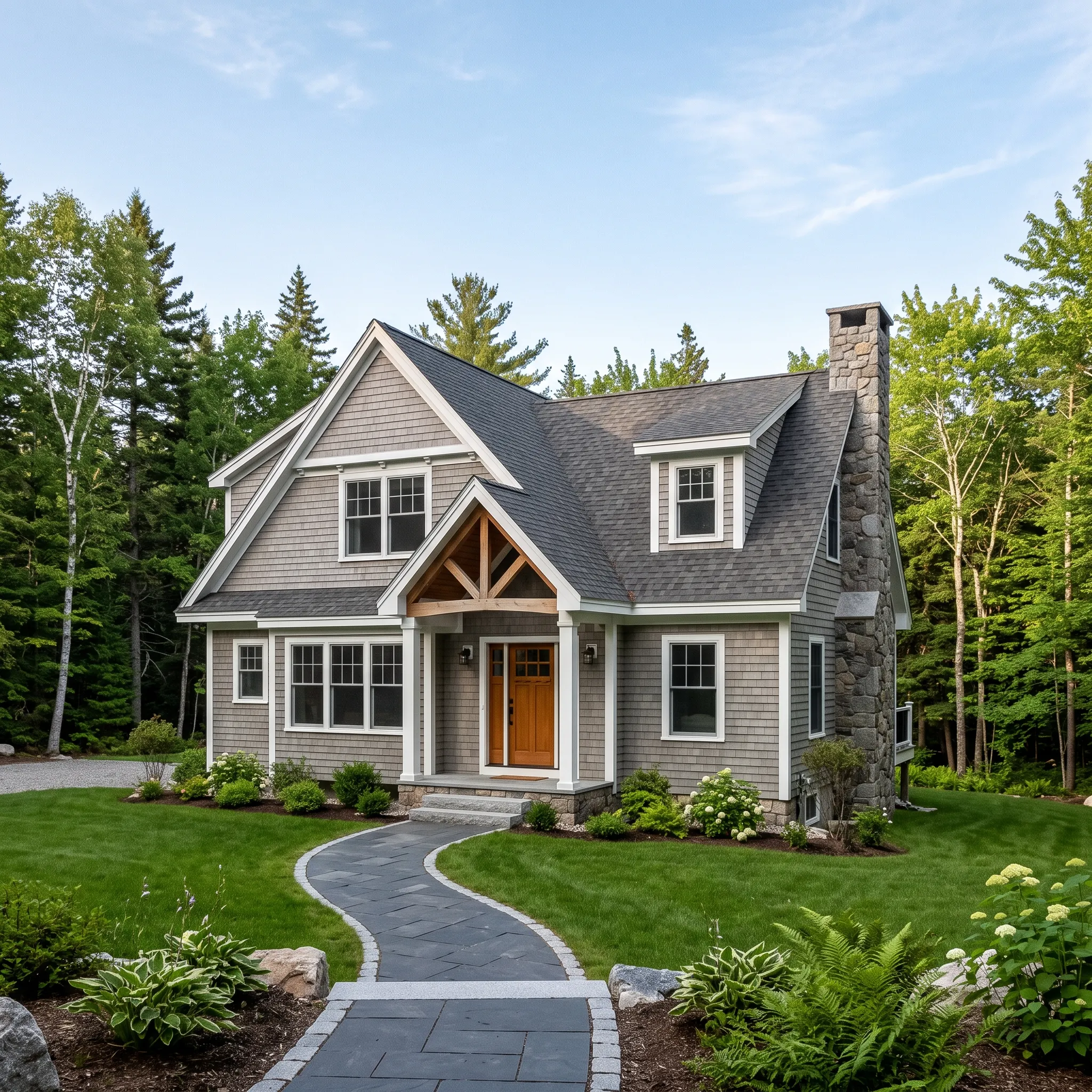
What Roofing Services Do We Offer?
- asphalt shingle roof installation and replacement
- metal roof installation and replacement
- roof repairs and patch work
- roof decking replacement
- flashing and ventilation upgrades
- full tear-offs vs. layovers
What happens after you call us about roofing?
Get your free quote
Ken walks the roof, checks the attic and the eaves, counts the layers and details, and prices tear-off honestly.
We bring your project to life
Everything comes off to the deck, failed sheathing is replaced, then membrane, flashing, ventilation and shingles in order.
Enjoy your new space
A roof fastened to sound wood, vented properly, with the yard swept clean afterward.
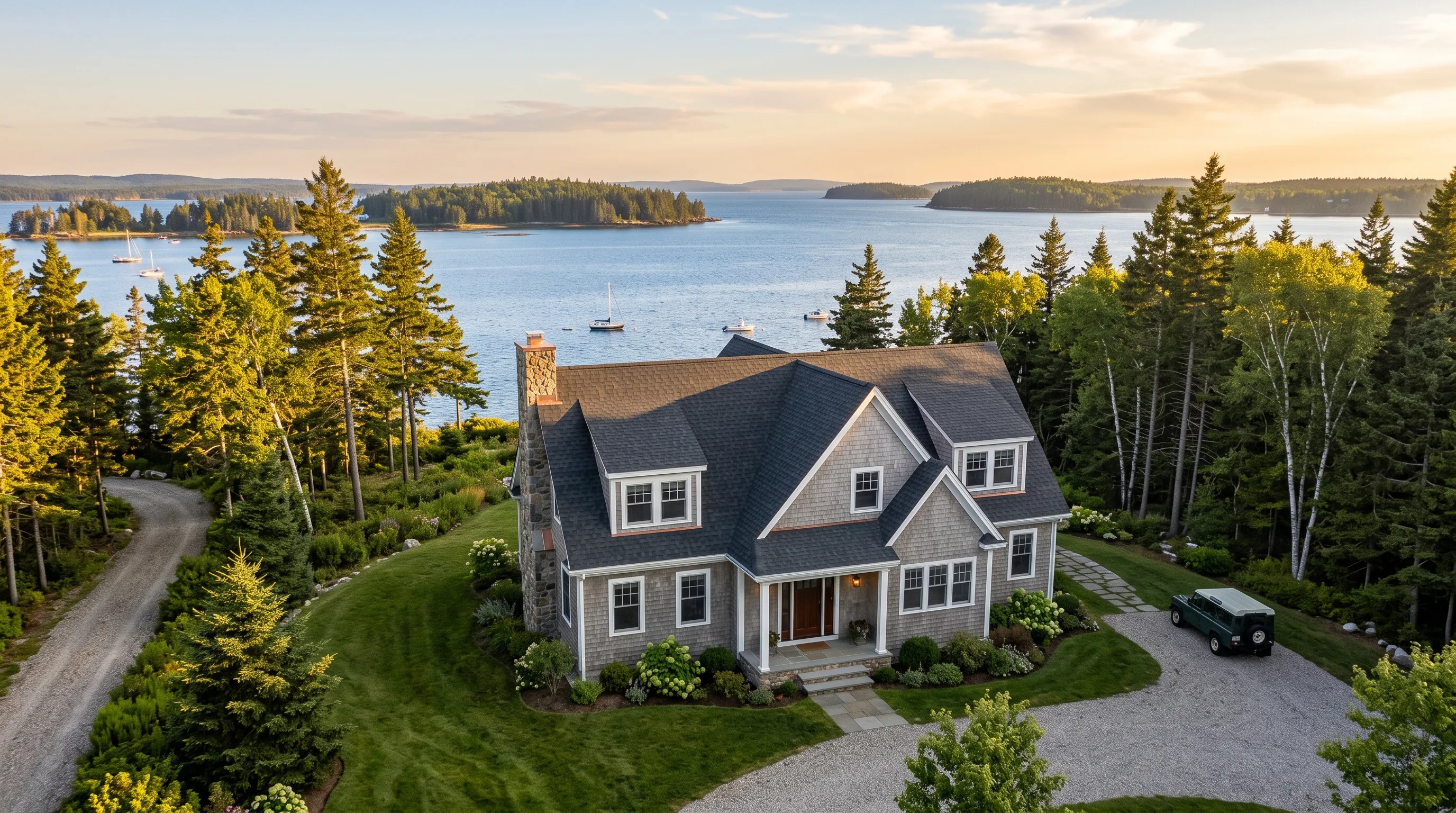
Why Should an Old Roof Be Torn Off First?
Roofing over an existing layer is faster and cheaper and it means nobody knows what the new nails are going into.
On older Maine houses the deck is frequently boards rather than sheet material, and decades of a slow leak around a chimney leaves sections that will not hold a fastener properly.
Stripping to the deck is the only version where the roof is fastened to something known. It also lets us run ice and water membrane at the eaves and valleys, which is not optional in this climate.
Nobody loses a roof from the field of the shingles. It goes at the chimney, the valleys, the penetrations, the eaves and the ridge, which is exactly where the care has to go.
Ken details those himself, and every roof we install carries a 2-year workmanship warranty from a BBB accredited company.
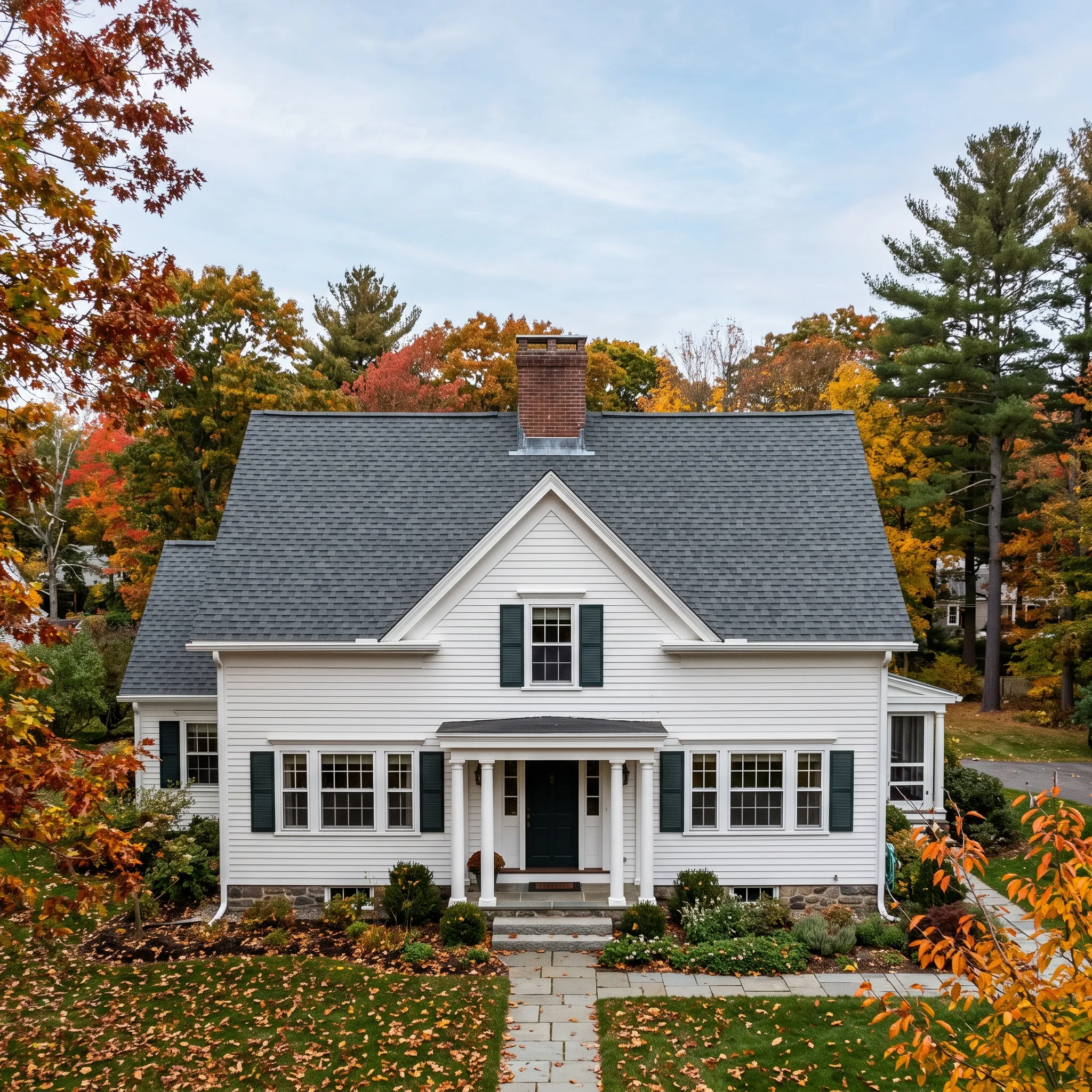
A roof needs intake at the soffit and exhaust at the ridge, working together. A ridge vent over blocked or nonexistent soffit intake does very little and can pull air out of the house instead.
We check both ends before quoting. Poor ventilation cooks shingles from underneath and shortens the life of a roof regardless of what was paid for it.
Ice building along an eave is caused by heat escaping into the attic, melting snow on the warm upper roof, and that meltwater refreezing at the cold overhang.
New shingles change none of that. Air sealing, insulation and ventilation are the fix, and membrane run well up from the eave is what protects the house while it happens.
- Chimney flashing built as step and counter flashing rather than smeared with roof cement
- Valleys with full membrane beneath them
- Plumbing vent boots, whose rubber collars perish in sunlight long before the shingles do
- Skylights, flashed with the manufacturer's kit rather than with sealant
Each of those is a small line item on a quote and the reason a roof does or does not leak. Roofing industry practice treats the flashing, never the sealant, as the waterproofing.
Metal costs considerably more, lasts far longer and sheds snow readily, which suits a simple roof on a building you intend to keep.
Asphalt costs less, handles cut-up roofs with many valleys without the price climbing, and repairs in sections. We install both and will price both on your roof.
Ask whether the quote is a tear-off or an overlay, in writing. The two numbers are not comparable and some quotes are deliberately unclear about it.
Then ask how failed decking is charged. A per-sheet price should be agreed before anybody climbs a ladder.
By area, pitch, the number of existing layers, penetrations and valleys, and access for staging and disposal.
Complexity moves the number more than material choice does. Ken counts what is actually there rather than quoting from the driveway, and the visit is free.
What roofing questions come up most?
Can I roof over my existing shingles?
You can sometimes roof over existing shingles where it is permitted, and it is rarely a good idea. Industry guidance is clear that an overlay shortens the life of what goes over it.
How long does a roof take?
A roof takes a few days on most houses, stripped and re-covered, weather permitting, with complex roofs taking longer.
When is it too cold to roof?
It is too cold to roof once shingles stop getting the warmth they need to seal down. We work into the cool shoulder with hand sealing where required and will say when waiting is the better call.
How long should a new roof last?
An architectural shingle on a properly ventilated deck lasts decades, and manufacturer coverage generally assumes that ventilation exists.
Asphalt Shingle Roof Installation and Replacement
Architectural asphalt is the best value for most Maine houses. It handles dormers and valleys, plus additions and other cut-up roof shapes without turning every transition into a custom metal detail.
Materials remain widely available, and damage confined to one area can usually be repaired without disturbing an entire slope.
The product is only the visible layer. We strip the old roofing, inspect whether the deck can hold fasteners, replace failed sections, and install ice-and-water membrane at vulnerable eaves and valleys.
Underlayment, drip edge, step flashing, vent boots, and ridge ventilation go in before the job can be judged by its shingle color.
We do not recommend an overlay merely because local rules may allow one. A second layer conceals the deck, traps additional heat, and leaves old flashing details buried beneath new material.
For most older Maine roofs, saving the tear-off labor is not worth giving up the inspection.
Metal Roof Installation and Replacement
Standing-seam metal is the stronger long-term choice on simple roof planes, especially rural homes and outbuildings where snow can shed without landing over an entry. Concealed fasteners avoid the maintenance burden of exposed screws, and long panels reduce the number of horizontal joints.
Metal is not automatically better on a roof full of dormers, valleys, short planes, and wall intersections. Every transition requires careful fabrication, and the labor premium can overwhelm the material's advantages.
On those houses, a well-detailed asphalt system often provides the more rational investment.
Snow behavior must be designed rather than discovered. Smooth metal releases accumulated snow quickly, so doors, decks, heat pumps, and walkways below may need snow retention or a different layout.
We identify those landing zones before recommending panels.
Full Roof Replacements vs. Targeted Repairs
Repair the roof when the failure is isolated and the surrounding material is still flexible, well bonded, and properly ventilated. A damaged vent boot, one failed chimney detail, or a short section lifted by wind does not justify selling a homeowner an entire roof.
Replace it when leaks appear in separate areas, shingles have become brittle across multiple slopes, or the deck shows widespread softness. Repeated patches on an exhausted roof move the same leak around without restoring the system.
The attic inspection usually tells us more than a photograph taken from the ground.
Emergency work follows the same judgment. A winter tarp or stable temporary repair can protect the house until shingles will seal in suitable weather.
Rushing a permanent installation during the wrong conditions is not a better service simply because the leak arrived in January.
Roof Decking, Flashing, and Ventilation Upgrades
Sound decking is nonnegotiable because every shingle or panel depends on its fasteners holding. Older plank decks may have gaps, splits, or soft areas around a long-term leak.
We expose those conditions during tear-off and agree on how replacement is handled before covering anything.
Flashing is the waterproof detail at chimneys and valleys, where a roof meets a wall, and around skylights and plumbing penetrations. Formed metal integrated with the roofing carries water away.
Roof cement and exposed sealant can serve as short-term maintenance, but neither should be treated as the primary assembly on a new roof.
Ventilation requires intake low at the soffits and exhaust high at the ridge. Adding a ridge vent without open intake does not create a balanced system.
In Maine, that airflow helps keep the deck dry and limits the roof warming that contributes to ice dams.
We also inspect bathroom fans and other ducts near the attic. Moist air must discharge outdoors through a sealed roof or wall cap, because dumping it beneath the roof adds condensation exactly where dry decking matters most.
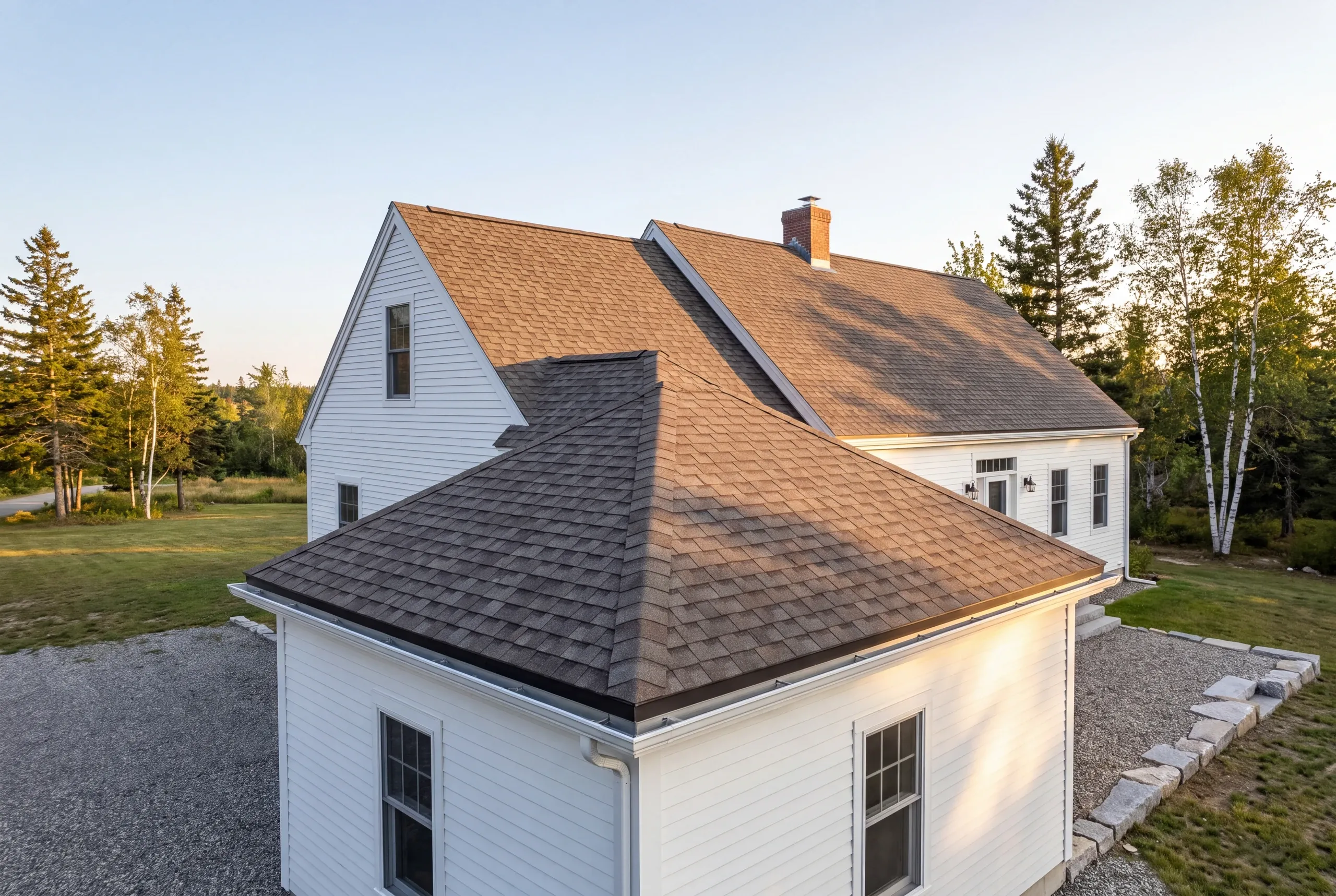
How do you get a roofing price?
You get a roofing price from us after Ken has been up on the roof, not from a guess off the driveway. Plenty of roofs we are asked to replace have years left, and some that look fine do not.
Ken will tell you which yours is, in writing and at no charge. He answers at 207-386-9235.